Friday, April 20, 2012

Secret Service still the best and the brightest

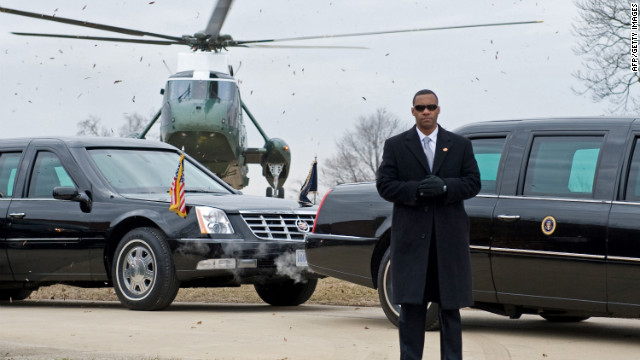
US Secret Service agent stands by President Obama's limousine at Fort McHenry in Baltimore in 2010
 
 
Editor's note: Jeffrey Robinson is the co-author of "Standing Next to History - An Agent's Life in the Secret Service," the autobiography of former United States Secret Service Special Agent, Joseph Petro. (St. Martins/Thomas Dunne Books. Available in both Kindle and Nook.)


Jeffrey Robinson
 
So a bunch of guys away from home, who should know better, take off their wedding rings, mix testosterone with alcohol and hookers --- an appalling combination --- argue over the price of a lady's company and, all of a sudden, the entire culture of the U.S. Secret Service is thrown into question.
All of a sudden, this is the worst disaster for the Secret Service, ever. All of a sudden, the Secret Service is out of control. All of a sudden, anything might have happened, like one of the 11 agents could have been blackmailed to open a door for a sniper or to look the other way as a bomb-carrying terrorist walks up to the president.
All of a sudden, the men and women of the Secret Service are no longer the best and the brightest. Especially the men.
All of a sudden... Stop!
It's time for a reality check.

The 11 agents who were sent home from Colombia in disgrace before the president even left Washington were there in a support role. Whether they were manning metal detectors or handling dogs that sweep rooms, whether they were part of a sniper team or standing post at 3 a.m. along a barricaded street, they were not members of the Presidential Protective Division (PPD). They were not on the president's shoulder. At no time was the president's security in danger.
What damage did their stupidity do? Obviously, a lot to their personal lives, their marriages and their careers. Obviously, also, a lot to the image and reputation of the Secret Service.
The legislation creating the Secret Service was sitting on Abraham Lincoln's desk, waiting to be signed, on April 15, 1865, the night he was assassinated. In those days, the Secret Service was housed inside the Treasury Department, and its job was to protect and defend the currency and monetary instruments of the United States. It didn't get the supplementary duty of protecting the president and vice president until after William McKinley was assassinated in 1901.
No agent I have ever met was hired for his sense of humor. These are very serious men and women who do their jobs very seriously.
They have always been the best and the brightest.
And they still are.
You can see it in the way they stand a little taller and walk with a different gait than others in law enforcement. You can see it in their pride. Frankly, I can't think of any other law enforcement agency where pride counts as much as it does with the Secret Service. It's the same pride that is always so visible with the U.S. Marines.
That's the reason why this scandal matters. Not because someone thinks the agency is out of control. It's not. Not because of wildly exaggerated threats of blackmail. No, Chicken Little, the sky is not falling. It matters because the idiotic actions of 11 agents who forgot who they are and what their badge stands for deeply affects every active duty agent and tens of thousands of retired agents. Pride has been dented. And agents are, rightly, furious.
These are men and women who have made -- and continue to make -- huge personal sacrifices for their share in that pride. The divorce rate among agents is high. That's not because they party with hookers, but because for the privilege of wearing that special five starred badge, they abandon any thoughts of their time being their own. They miss birthdays and Christmas, Little League games, graduations, school plays, first teeth, first steps, first words.
When the president travels, especially overseas, it's a flying circus with 800-1,000 people, limousines, helicopters, communications equipment, big guns, small guns, sometimes food, and often 20-30 planes.
As an integral part of this, Secret Service agents have two main concerns: To create and to maintain a tightly controlled environment in which the president can do his job safely and to bring everyone home at night.
Anything short of that is, the way the Secret Service defines the word, failure.
Just as those two things are true, so are these: What happened with those 11 agents is defined as stupidity. They will be dealt with quickly by the Secret Service. The president's opponents will pretend that there are political ramifications and invent whatever capital out of this that they can to embarrass the president. It will take a long time before pride is fully restored, and, if this ever happens again, it will definitely not be soon.


Font:: By Jeffrey Robinson, Special to CNN

Wednesday, April 18, 2012

NATO to Declare Missile Shield without Putin


BRUSSELS, Belgium — This is what years of development, revamp and acrimony have yielded: Starting in May, Europe will have the beginning of an operational shield against ballistic missiles, courtesy of NATO.
The system will be modest at first, not much more than SM-3 interceptor missiles aboard the U.S.S. Monterrey, a ship enabled with the Aegis Ballistic Missile Defense system and stationed in the Mediterranean. It’ll be aided by an early-warning radar system Turkey’s hosting at its Kurecik base.
But together, they form what a senior NATO official told reporters on Wednesday was an “interim capability” to stop incoming missiles — the first, ever, in Europe. NATO will formally announce it in May at its big summit in Chicago, and when defense chiefs meet here on Thursday, they’ll get updated on its progress.
There’s a long, long way to go in what the Obama administration calls its “phased adaptive” approach to the Euro missile shield. The SM-3 interceptors aboard the Monterrey — the first of many such ships headed to the Med — can only stop short- to intermediate-range missiles. (NATO would not disclose the exact range for the “interim” shield.) It will take years to add even the entire easternmost parts of the continent to the shield — the “phased” part of “phased adaptive” — as its first ground-based anti-missile missiles, which will be hosted in Romania, won’t be operational until 2015. And the shield won’t be able to stop intercontinental ballistic missiles until 2020, if everything goes according to plan.
Still, it’s something. The Bush administration pushed for a ground-based missile shield on the continent early in its tenure, primarily aimed at blocking incoming Russian missiles. The Obama administration transformed the plan into one based, at first, at sea, maneuverable to address missile threats from different countries as they emerged — the “adaptive” part of “phased adaptive.” It was based on the idea that Iran is the greatest missile threat to Europe right now, not Russia, but it got Obama slammed for allegedly selling out Eastern Europe to Moscow while failing to secure Russia’s acquiescence to the shield.
And it also might not work. NATO officials here are big on portraying the SM-3 as a proven technology. (It’s the weapon that shot down a rogue satellite in 2008, for example.) But an inquiry by two MIT and Cornell scientists found that “in eight or nine of the 10 SM-3 intercept tests from 2002 to 2009,” the interceptor failed to destroy an oncoming warhead. The Pentagon has rejected this claim.
NATO also wouldn’t discuss how Iran would react to an announcement of an infant missile shield. “It’s aimed at incoming missiles, not a [specific] country,” said the senior NATO official, who would not brief reporters on the record. But the White House explicitly predicated its entire phased-adaptive approach on blocking Iranian missiles — and Iran, which last week got hit with a European oil embargo, is still making threats to close a crucial waterway.
But announcing the shield is less about immediately defeating specific threats than a “political declaration,” says Anders Fogh Rasmussen, NATO’s secretary general. In other words, it ends a debate, one focused as much on alliance members as those who threaten it. NATO argued internally for over a decade about whether such a system would even be desirable. But now, it’s sending the message that a European missile shield is an irreversible fact that missile-wielding adversaries have to adjust to.

Tuesday, April 17, 2012

Possible Russian Responses to an Attack on Iran

By Majid Asgaripour, Mehr News Agency, via AP
Iran defies international pressure: A worker rides a bike in front
of the reactor building of the Bushehr nuclear power plant Oct. 26


As international activity surrounding the Iranian nuclear program intensifies, it seems that the question of a possible war on Iran is taking center stage on Russia's agenda as well. There is evidence of heightened diplomatic activity, along with military preparations and an expanded public debate reflecting differences of opinion within the Russian establishment.
On the diplomatic and political levels, there has been extensive Russian activity for quite some time, but the pace is accelerating to match the heightened international pressure. Amidst this, the Russian stance on the Iranian nuclear program has undergone several changes, in particular since the publication of the most recent IAEA report. If before the report was published Russia refused to recognize the existence of the Iranian program, the current stance is as follows: Russia views the nuclear program in a negative light and sees it as a threat to the international system and Russia itself, but there is still no unequivocal evidence on the existence of such a program (although some say that Iran is well on its way to becoming a threshold state or has in fact already become one); the international community must act to contain the program, but not by means of sanctions, which are in any case ineffective and will not achieve their goal; and of course, there should be no military action, which is deemed catastrophic and harboring the seeds of destruction, both for the region and on the global level. The only solution is the diplomatic one, and Russia currently supports holding negotiations between the international community and Iran, with Russia and the West cooperating in this endeavor. Russia believes that it has a definite capacity to influence Iran, and it is likely that Russia expects to translate this into bonus points on the international arena. Indeed, Russia is expected to take an active part in the upcoming P5+1 talks.
Thus for the diplomatic level. In tandem, there are Russian voices – fairly authoritative ones, it should be said – averring that an attack on Iran is already a done deal and will take place within the next few months. Some identify an American intention to start an all-out war against Iran, even if the attack is carried out by Israel. This is understood as a threat to Russian interests because it is an attack on a Russian ally and a member of the political axis headed by Russia. Moreover, such a war can be expected to spill across Iran’s borders into the sphere of Russia’s geopolitical interests, especially the Caucasus, and to draw regional states into the conflict. At issue specifically are Azerbaijan and Georgia, together representing one component of a Western strategic axis (it is customary to mention Israel too in this context) blocking Russia’s access to the south, as well as the Iranian border. Armenia is further south and is presented as a member of the Russian-Iranian axis; Russian army units are currently deployed there. In this setting one also hears of a scenario in which a conflict between these Caucasus states can be expected (several reasons for this have accumulated in recent years), in which Russia would be forced to become involved and make its way south, through their territories, in order to extend help to its allies – Armenia and Iran. Beyond this, dire warnings about a large influx of refugees that would for some reason flee northwards from an Iran under attack towards the Caucasus and eventually Russia itself have been sounded from many quarters for quite some time. Even if this last scenario is highly dubious, it has become a major (propaganda) justification in Russia's regional military preparations.
Nor has the subject remained entirely theoretical, and in recent months Russia has prepared in practical terms for just such a war. This includes formulating operational and logistical solutions to prepare Russia's southern regional district, via staff and troop exercises and including ABC warfare, for a possible confrontation. The forces deployed across from the likely arena of conflict – supposed to encompass regions beyond the Caucasus, including the areas of the Caspian Sea, the Black Sea, and the Mediterranean – are being beefed up. The current Russian-Turkish tension is also relevant in this context, as Turkey is liable to become an active enemy of Russia. Also noteworthy is the activity of the Russian Navy in the eastern part of the Mediterranean, which involves friction with the Turks in the waters of Cyprus, and the constant presence across the coast of Syria, Russia’s ally in the same axis (and Russia’s conduct on the Syrian issue over the past year figures in this calculation as well).
All of the above has recently begun to surface in the media, and at the same time there seems to be a kind of debate in Russia about the Iranian issue among senior politicians, military personnel, and academics. Generally speaking, one may discern two camps in this debate: the camp supporting a war, spouting anti-Western slogans, and calling for violent action to advance Russian regional and global interests while exploiting the situation to solve ancillary geopolitical issues both in the Caucasus and the Middle East. Some are calling to remove the threat from Iran, Russia’s ally, by undercutting the sanctions, consolidating an anti-Western coalition, and even threatening the use of strategic weapons. A few even view Iran’s desire for nuclear weapons in a positive light – as a means of increasing regional stability.
On the other hand, there are academic and public figures vehemently opposed to these drums of war. Discerning elements that are interested in seeing a war erupt in Iran that involves Russia, this camp warns of the destructive ramifications of this scenario and calls for more modest Russian international aspirations, with Russia taking a firm stand within the international community and acting in concert with the other nations to contain Iran’s nuclear program, whether through dialogue or through the application of coordinated international pressure.
The impression has thus been created that Russia as yet has no clear, unequivocal stance, at least externally, on how it would react if and when Iran comes under attack. Internal disagreement reflects both indecisiveness and various ambitions. Nonetheless, the preparations for a military response to an attack on Iran seem genuine enough. At the same time, it appears that Russia is not keen on direct military intervention on Iranian soil, but would rather deal with one of the following scenarios:
a.              One scenario would be meant to display power, perhaps by moving military units to the Iranian border or by flying the flag around the Caspian, Black, and Mediterranean Seas, while making use of bold rhetoric in order to gain points on the international arena (suffice it to remember Russia’s need to recover from damages incurred due to the Arab Spring).
b.              In a second scenario, Russia could exploit an attack on Iran – should the proper circumstances present themselves – to promote its geopolitical interests in the Caucasus, while moving forces towards Azerbaijan and Georgia to help its allies, solve humanitarian problems (such as the flood of refugees), and engage in similar activities.
In any case, it seems that Russia is facing a dilemma over which there is now a charged debate with implications for all sides involved.


Font: המכון למחקרי ביטחון לאומ


.

US to investigate secret service scandal

Pentagon says alleged misconduct by Obama's security personnel and military at hotel in Colombia has "embarrassed" army.
 General Martin Dempsey, right, said the service members had let President Obama down [Reuters]

The US Secret Service has revoked the security clearances of 11 agents accused of hiring prostitutes on the eve of President Barack Obama's weekend trip to the Americas summit in Colombia.

The agency in charge of providing protection for the president confirmed on Monday that it was investigating the allegations that its members brought prostitutes to their Cartagena hotel on Wednesday, near where the president was to stay.

Colombian police said five US military service members were also involved in the incident.

But Army Colonel Scott Malcom, a spokesman for US Southern Command, said an interim investigating officer who began working to collect evidence in the case found information indicating more than five service members may have been involved.

The top US military officer, General Martin Dempsey, chairman of the joint chiefs of staff, said that the service members had let Obama down by distracting attention from his meeting with Latin American leaders in Cartagena.

The alleged incident occurred before Obama arrived in Cartagena, but the news broke while he was there.

"We let the boss down because nobody's talking about what went on in Colombia other than this incident," Dempsey said at a news conference with Leon Panetta, the US defence secretary.

"I can speak for myself and my fellow chiefs, we're embarrassed by what occurred in Colombia."

Panetta said General Douglas Fraser, the head of Southern Command, had begun an investigation to determine the facts of the incident.

'Rigorous investigation'

Obama said on Sunday that he expected a "rigorous" investigation into the alleged misconduct.

"If it turns out that some of the allegations that have been made in the press are confirmed, then of course I'll be angry," Obama said.

"We are representing the people of the United States, and when we travel to another country, I expect us to observe the highest standards."

In the US capital, legislators said they were shocked and upset by the allegations, pointing to the security risks involved.

"I am having a call this evening with the director of the Secret Service, because I find this to be so appalling," said Senator Susan Collins, the top Republican on the senate homeland security and governmental affairs committee, which shares jurisdiction over the Secret Service with the judiciary committee.

"I can't help but think what if the women involved had been spies, what if they had been members of a drug cartel, what if
they had planted equipment or eavesdropping devices?"

General Fraser said he was "disappointed by the entire incident and that this behaviour is not in keeping with the professional standards expected of members of the United States military".


Source: Agencies

Sunday, April 15, 2012

Foreign Spies Stealing Economic Sectres

Report to Congress on Foreign Economic Collection and Industrial Espionage, 2009-2011
Office of the Director of National Intelligence
October 2011, pp. 31


http://dni.gov/reports/20111103_report_fecie.pdf

Document produced by the office of Director of National Intelligence dedicated to the threat of industrial espionage against the economic interests and security of the United States of America. The cyber security is a high priority for the U.S. intelligence community, and the study aims to highlight the risk component related to the economic threat.

Wednesday, April 11, 2012

Violated one of the most protected buildings in Italy.

Ministry of Defence Palace

The March 19 has been breached the security of a building no longer protected in Italy (at least so it should be) some "intruders" are entered at the Palazzo Baracchini on Via XX Settembre in Rome headquarters of the Ministry of Defence.
The police guard (MP) have noticed that someone has been introduced in the offices and ransacked the rooms.
Sparse press release from the Ministry of Defense released a few days later:
"This morning (on May 19, 2011) - it says - the policemen on duty noted the commission of a robbery in one of the offices of the Department. Investigations are underway. "
Since the early findings of investigators has discovered the theft of a reasonable amount (not quantified) of money and some ornaments. The office of the intrusion object is not close to that of the Ministry, but the police are checking if the "thief" was interested in other goals.
Still to clarify the time of '' intrusion 'men of the Police Department Operating Via Selci In the police have heard of the "military police" who perform security service to the Ministry, investigators are investigations on the "theft". But given the sensitivity of the documents held within the building are also checking with the office computer hacked and checks are being conducted on the numbering of the copiers.
Palace Baracchini besides being the headquarters of the Ministry of Defence houses the offices of AISE (The Military Intelligence).

Coat of arms of the A. I.S.E. - External Security and Information Agency

The Ministry of Defense closes the door to the 10 p.m., except in special needs. On Saturdays and Sundays only opens the side door for the passage of pedestrians. Passage that is filtered by the Police present at the door and a metal detector door that allows access into the palace itself.
Most windows have locks and armored glass, and then seemingly inviolable. The building next door, Caprara Palace houses the Joint Chiefs of Staff, elsewhere 'armored', opposite to where the Palace Army Chief of Staff of the Armed Forces.
Not to mention that during this period, a few tens of meters there is a permanent monitoring and strengthened law enforcement officers at the Embassy of India, the scene of events because of the affair that sees two Marò of San Marco 'confiscated' by police of that state.
Basically the area is considered a kind of Fort Knox, but someone managed to get to Palazzo Baracchini, violate the security systems and the Military Police in charge: it was introduced in the building has reached the office where he kept money too cash and has seen fit to take away some souvenirs: ornaments in the same office.
Honestly, it looks like a "joke" to enter a building, which in theory should be super secure, remember that also houses the offices of the Military Intelligence Service, was released without being noticed and leave obvious traces of its passage ....
What was really looking for?
Did you find the information you were looking?
And if they have stolen documents vitality of Homeland Security, what risks we're going against?
And the staging was used to distract or send a signal to someone?
The Police Department's operation are controlled with the staff of the department if there were any "visits" in other rooms of the building, but I doubt you can find something, surely it is professional.
But all this leads to another problem, we are so vulnerable in our security sensitive buildings? How is it that the Palace of the Ministry of Defense and offices AISE there is manned 24 hours a day, we have dozens of missions abroad and the services should be operational 24 hours a day, given that "should have staff around the world. "
But as written offices close at 10 p.m. .... Closed Saturday and Sunday ... day of rest, we see that even the vigilance rests.

India reinstated as naval superpower with induction of nuclear sub


India has inducted a nuclear-powered submarine into its Navy after a lease agreement with Russia for the Chakra became official today.
Defence Minister A.K. Anthony unveiled the new vessel, which is to be operated by the Indian Navy for 20 years, at the Visakhapatnam shipyard.
The move signifies a significant step in India’s naval capability as it becomes only the sixth Navy in the world to have a nuclear sub. Importantly, one of those other five is China.
India is increasingly building up its land, sea and air defences as the threat from China continues to pervade in the region.
To protect against the threat from China Admiral Nirmal Kumar Verma, Chief of the Naval Staff for the Indian Navy, explained to India Today in January that strategic outposts in the surrounding region must be established.
“We are creating infrastructure in the Andaman and Nicobar, Lakshadweep and Minicoy islands which form our country's strategic outposts," Admiral Verma told IT. "They enhance our country's forward operating capability.”
Vice Admiral Anil Chopra, Flag Officer Commanding-in-Chief of Eastern Naval Command, told IBN at the same time that India must not only increase its naval presence in the region, but that it must build the infrastructure and ships to go with it.
“49 ships and submarines, which are under construction, would be inducted in the next five years. Out of these, 45 are being built indigenously at the Indian shipyards, while four are being built outside India,” Chopra said.
In support of this strategy, later this year the INS Chakra is expected to be joined by the induction of the Indian-build INS Arihant, another nuclear submarine the government revealed in 2009.

The Terror Attack in Toulouse: Aberration or Symptom?


The events in Toulouse shone a spotlight on the threat posed by global jihadism to Europe and on several problems that for some time have been on the French and European Union agenda, first and foremost the difficulties of integrating the Muslim immigrant community and the issue of anti-Semitism. From an analysis of the events in Toulouse – both the practical aspect, manifested in the cold-blooded murder of French soldiers and Jewish citizens, including children, and the ideological aspect, which the murderer took pains to expound during the siege on his place of refuge – it is clear that Mohamed Merah was a classic product of the global jihad industry, similar to many other young men around the world trained by al-Qaeda and its affiliates. As such, the reason for his acts was ostensibly his desire to take revenge on the French for France’s military involvement in Muslim countries, for France's ban on Muslim women wearing full-face veils in public, and for the suffering of Palestinian children as a result of the Israeli occupation.

The case of Merah, a second generation member of an immigrant family of Algerian origin who failed to adapt to French society and together with his brother was exposed to extremist jihadist Salafist indoctrination, is not one of a kind. The ideas espoused by al-Qaeda and its affiliates threatened to explode in Europe long before 9/11, when France, the Netherlands, and Belgium uncovered terrorist cells whose members had trained in Afghanistan and were sent back to their native countries to murder and wreak havoc in the name of the same worldview presented by the murderer in Toulouse. After the attack on the United States in 2001 it became clear that many European nations are home to networks actively supporting the spread of global jihadist ideology, while recruiting new supporters and activists via extremist preachers who work out of mosques, through the internet, and through recruiters working on behalf of al-Qaeda and its affiliates. They induce new volunteers to visit arenas of conflict in Iraq, Afghanistan, and Pakistan in order to experience firsthand an active jihad against the enemies of Islam. When they arrive at the training camps they receive not only training in terrorist techniques and guerilla fighting but also intensive, aggressive indoctrination that results in many of them returning to Europe and pursing terrorism in order to avenge the citizens of the nations that support what they consider to be aggression against Muslims.

Even if the number of those turning to terrorism is not large, the story of Merah and the general phenomenon throughout Europe demonstrate the failure of the immigrants' host countries to persuade Merah and others like him that a better future awaits them if they adapt to their new society. While there are Muslim immigrants who have integrated successfully in West European society in various professions and in the academic world, a considerable portion have failed to adjust to their new societies. A study published in 2011 by the Council on Foreign Relations on the issue of Muslim integration in Europe points to a number of challenges – poverty, self-segregation, religious difference related to questions of identity, cultural differences, and more – as the primary causes making the process of integration (and adaptation) of the Muslim community on the continent so difficult. According to the study, the discussion of the integration of Muslims focuses on the fears of Islamic radicalism, with an emphasis on terrorist activity. In addition, according to the Pew Research Center, the number of Muslim immigrants is expected to rise from 44.1 million in 2010 to approximately 58 million in 2030, an increase from 6 percent to 8 percent of the general population on the continent. This increase should force EU nations to confront the various challenges, though the process can be expected to be long and full of pitfalls, and one of its results is liable to be a change in what constitutes European identity. Along with the radicalization in portions of the Muslim population, radicalization in EU nations has begun to emerge in recent years: the rise in the power of political parties promoting a xenophobic, anti-immigrant (and anti-Semitic) agenda and placing limits on immigration, especially of Muslims. In addition to this trend, one should consider statements made by leaders such as Cameron, Sarkozy, and Merkel about the failure of the multicultural model.

It may be that the investigation of Merah’s brother, currently in French police custody, will show that the murderer from Toulouse acted as a lone wolf (even if he received help or emotional support from his brother) rather than on behalf of a terrorist organization, but the act may still inspire copycat crimes, as it is clear that many European nations are ripe for violence on the part of young people from similar backgrounds who seek revenge via a range of horrific acts against anyone seen as an enemy of Islam. Learning the right lessons in France in particular and in Europe in general for immediately confronting the phenomenon in terms of legislation, security, and intelligence gathering is relatively easy compared to the long term challenges involved in integrating Muslim immigrants on the one hand and dulling the motivation of the minority that chooses terrorism on the other. At the same time, it is precisely the demographic forecasts and the various economic and social constraints involved in immigrant absorption that obligate the European political leadership to view the most recent terrorist acts as another wake-up call for taking long term steps with significant and extensive social implications, before the next disaster.

For Israel, the Merah case may contain future ramifications for Diaspora Jews liable to result from Israeli government decisions and actions. However, even if Merah is to be believed that the Jewish school was not at the top of his list of targets, by attacking the pupils at the Otzar Hatorah school he expressed an entire worldview that sees Jews and Israel as one seamless entity, a mortal enemy of Islam that must be destroyed everywhere and by every means. In this case, it is doubtful that the call by an official Israeli figure to the Jews of France to “come home” is useful to the Jewish community.


Font: המכון למחקרי ביטחון לאומ
Our thanks to Einav Yogev, research assistant in the Terrorism and Low Intensity Conflict Program at INSS, for her assistance in writing and editing this essay.

Tuesday, March 6, 2012

The Rise of Qatar

The upheavals in the Arab world have done much to highlight Qatar's rising prominence and its policy of active involvement in most of the areas of regional unrest. This policy – a mixture of opportunism and ambition – together with tremendous economic power and the willingness to use it for political ends, as well as the weakness of major centers of power in the region and beyond, enable the emirate's entry into the vacuum that has been created and the emergence of its new political status.
Qatar’s economic strength is a direct result of its natural gas reserves. Currently the largest exporter in the world of natural gas (LNG), the emirate has the largest natural gas reserves in the world after Russia and Iran. This coveted resource has ensured that Qatar’s 250,000 citizens (out of about one million residents) have the highest per capita gross income in the world, with the extraordinary growth rate of more than 18 percent in 2011. Alongside this economic clout, the ruling al-Thani family has created an enormously influential tool in the form of the al-Jazeera television network, which since its launch in 1996 has become an effective tool in the emirate’s foreign policy. The network has long enjoyed large audiences in the Middle East, and the revolts in the region only increased its popularity. Furthermore, the network is a key instrument for gaining state influence. The network adapts the nature of its reports so as to curry favor with certain leaders, even outside the Arab world, and criticizes those who recognize the impact the station has on public opinion – as a means of applying pressure to change positions vis-à-vis Qatar. Indeed, more favorable TV coverage of the Saudi royal household on al-Jazeera proved itself to be valuable in improving Qatar-Saudi relations.
Al-Jazeera gives the conflicts within the Arab world a great deal of exposure, and this in itself provides the ruling dynasty with much immunity against criticism of the lack of democracy in the emirate. The events of the "Arab spring" placed all the royal households of the Arab world, including that of Qatar, is a difficult position. On the one hand, all are trying to preserve the traditional regime and the absolute control of internal political processes; on the other hand, there is an impetus to adopt a position that ostensibly identifies with the masses that took to the streets to protest corruption and oppression. Significantly, al-Jazeera director Wadah Khanfar, who had made a name for himself as an ardent supporter of democratic processes and the involvement of civil society in the Arab world (as well as being a supporter of Islamic movements, including Hamas) was already ousted in September 2009, in order to ensure network obedience to the emir. Not coincidentally his successor is a member of the al-Thani tribe.
Qatar’s involvement in the Arab world over the last decade is impressive. In the crisis in Yemen, Qatar served alongside other members of the Gulf Cooperation Council as a mediator and arranged the ouster (though with good terms) of former President Saleh. Among Arab states, it leads (with considerable Saudi backing) the activism regarding the civil war in Syria; leaders do not even deny that they are sending weapons and major financial aid to the Syrian opposition. Naturally these arms shipments are raising important questions, such as where were the weapons bought, how do they reach their destinations, is Qatar getting encouragement, support, or cooperation from other states that are not interested in being revealed as actively assisting the Syrian rebels, and more.
Qatar is also involved in the establishment of the new government in Tunisia and perhaps more than any other Arab entity helped topple Qaddafi’s regime. It pushed for NATO military action in Libya and even sent (in addition to the UAE) six fighter jets as symbolic assistance to the NATO effort to enforce the no-fly zone over Libya. Qatar was the first Arab state to recognize the rebel government of Libya, it sold oil in its name, and it supplied it with extensive economic and military aid. It trained and equipped the opposition forces and even sent its own forces to help with the actual fighting. This policy enabled Qatar to divert attention away from what has been happening in the Gulf and prove it is a responsible member of the international community. From its perspective, it has already reaped the benefits of its investment: Western leaders have been effusive in their praise of Qatar’s act of moral leadership.
The emirate’s recent involvement in the inter-Palestinian conflict is also noteworthy, and it has at least temporarily taken the place of Egypt, which is preoccupied with its own internal issues, as the primary mediator between Fatah and Hamas. The framework agreement achieved on February 6, 2012 between Fatah and Hamas was signed in Doha, Qatar’s capital, and bears its name. Qatar also mediated between Jordan and Hamas leader Khaled Mashal, and the Qatari heir to the throne attended the meeting between the King Abdullah of Jordan and Mashal.
In late February 2012, the Emir of Qatar announced a new initiative calling for an international investigation of all Israeli activity in Jerusalem since 1967 designed to “erase its Muslim and Arab sites.” The Emir called on the participants of the Doha International Conference for Defending and Protecting Jerusalem to demand that the UN Security Council convene a committee to investigate the issue. This initiative will earn Qatar more bonus points in the Arab street – points it needs because of its policy towards Syria – though the initiative’s chances of realization are very slim.
Qatar’s public activism on the Palestinian-Israeli issue has hurt Israel. Qatar’s connections with entities such as Iran and Hamas – connections that, in its view, immunize it against harm from those same elements – led Israel in March 2011 to sever its ties with Qatar and close the diplomatic mission in Doha, forbid Qatari passport bearers from visiting the West Bank, and stop the cooperation between Qatar and Israel’s security industry. Nonetheless, Qatar has not hidden its willingness to maintain open relations with Israel on condition that Jerusalem prove its serious commitment – in Qatar’s view – to the political process, a low threshold condition compared to the terms posed by the rest of the Arab world for establishing open relations with Israel.
Qatar’s investments in East Asia, Europe, and the United States in infrastructure projects, real estate, financial institutions, and even soccer clubs are turning the emirate into a key player with influence in these arenas. In the annals of modern history, it is hard to find a similar instance of so tiny a nation implementing a foreign policy of such high profile. For the sake of comparison, Luxembourg has similar statistical characteristics but its ambitions – and its political influence – are far more humble.
Qatar excels in identifying processes and trends in the region and beyond and is quick to confront them. For Qatar, the rapid identification with trends in Arab public opinion is necessary in order to maintain its security, as long as these trends do not reach its own doorstep or threaten its relations with its stronger neighbors, Saudi Arabia and Iran. This was true in the case of the Arab spring and the key role Qatar played in its events. At home too, Qatar is trying to preempt the criticism that might be leveled against it. Emir Hamad Ben Khalifa recently announced that for the first time in the nation’s history he would hold elections for the Qatari Shura Council in the second half of 2013. According to him, in light of the huge changes in the region, pacifying messages are not enough; it is necessary to promote ongoing reforms. The promise to hold elections will allow Qatar to weather at least the next few months peacefully. Accordingly, and spurred primarily by survival instincts, the emirate can continue to enjoy political and economic stability and furnish political and economic support for the radical forces in the region, while taking advantage of the leadership vacuum left by larger nations to promote its own particular agenda.


Font: המכון למחקרי ביטחון לאומ

Sunday, February 19, 2012

More Trouble for the F-35?


In early December 2011, a US Department of Defense report about the F-35 Joint Strike Fighter (JSF) was leaked to the media.[1] The report, dubbed the "Quick Look Review" (QLR), was written by a committee that included some senior US defense establishment figures who were charged specifically with looking into the question of "concurrency," i.e., selling the airplane while the flight testing is still underway. The committee was set up in light of a less than glowing report about the flight tests submitted at the end of October.
Concurrent acquisitions have been part of virtually every large weapons acquisition project in the West in recent decades. The extended development and production timetables have always required the start of low rate initial production (LRIP) before the conclusion of all testing and sometimes even before the end of the final development. The assumption is that flaws that surface during testing can be fixed later in units manufactured in the early batches.
In the case of the F-35, this method has been stretched to unprecedented lengths. The plane’s developers relied on the fact that the development methods, particularly regarding the computer simulations – based on the experience with development of the F-22 at Lockheed Martin – would allow them to reach a design mature enough to begin procurement even before flight tests began. Thus, the first batch was ordered in FY 2007, even though flight tests only started in 2008. By FY2011, 88 planes had already been ordered and the acquisitions for the next few years are planned at the rate of 30-40 additional planes every year.
Toward the middle of 2011 it became clear that the flight tests were not progressing at the anticipated rate and indicated that the design of the three F-35 models was not as mature as had been expected. The bottom line of the QLR report was that while there is no reason to stop concurrent acquisition altogether, there are, in the language of the report, several problems with “major consequences” regarding continued production.
So far, more than 700 change requests (CRs) have been submitted. The committee noted that it takes 24 months on average from the time a CR is submitted until the change is actually introduced in the planes on the production line. As for the planes made up until then – they will have to be modified at a later date, with an additional cost to the plane.


Among the problems of major consequence are problems with the pilot’s helmet mounted display system (HMDS).[2] There are severe safety problems with the fuel dump subsystem, and problems with the reliability of the integrated power package (IPP).[3] The report’s authors also indicated problems whose full extent would only become apparent during later testing.
The flight test program is only in its initial stages. So far only 19 percent of the planned testing is complete, and all tests were within the more “conservative areas” of the flight envelope. Likewise, no testing has yet been undertaken to certify weapon systems.
The QLR report does not deal with the cost of the plane, but recently published data indicates that the cost of planes from LRIP 5 (whose production has recently begun) will reach some $160 million. This price does not include the cost of the modifications and repairs that have already become evident or those that will appear during later testing.[4]
According to the current schedule (which may yet change), only the planes going into production after 2018 will have full operational capabilities. These planes will only be supplied some time after 2019-20.

In August 2010, the Israeli Ministry of Defense announced its intention to acquire 20 F-35 planes (the security cabinet’s approval was granted in October 2010). During the negotiations over the issue, there was talk of delivering the planes starting in 2014 at the earliest. As of now, the order is for 19 planes to be delivered starting in 2016 at the earliest. The latest report published has direct implications for the Israeli Air Force’s ability to take delivery and integrate the planes. Some estimate that the delivery date will be postponed, perhaps even until 2018.
The F-35 is without a doubt the most advanced combat aircraft in terms of its stealth, ability to pinpoint and identify targets, and help the pilot's situational awareness. Indeed, one could accept the proponents' claim that the transition to the fifth generation fighter is a huge technological leap. However, the most recent report shows that even if the first planes are supplied in 2018, these will come from one of the LRIPs before the end of the flight tests. In exchange for a $140-160 million price tag per plane, the Israel Air Force will take delivery of planes that are not yet certified to carry any sort of weapon systems, are not certified for the entire flight envelope, and will almost certainly have to be upgraded to repair flaws that will only emerge during later flight tests.
The defense establishment is thoroughly convinced that the planes will be supplied by the end of 2016. Air force pilots will start training on them in the United States even earlier than that. Furthermore, sources in the defense establishment say that changes and improvements in fighter jets, even new ones, are a routine matter. In the past too, Israel acquired planes that underwent such changes as soon as they landed here. As for the flaws noted in the QLR, the defense establishment is aware of them and is also aware of the technological solutions to fix them – solutions that will be incorporated into the planes intended to be delivered here.
Were Israel to buy the fighter jets with Israeli taxpayer money, it is certainly a question whether the acquisition of the F-35 is a worthwhile deal at this stage. However, even under current circumstances, when the planes are bought with the special American defense aid funds, it is worth giving serious reconsideration to the questions: On which weapon systems does it make sense to use the defense aid money in the next few years? Is not a good idea to postpone the purchase of the F-35 until the coming decade and in the meantime invest the money in different weapons systems?
At the same time, it should be asked: in what ways have the threats against Israel changed, and to what extent can the existing aircraft array confront them? Fifth generation planes would certainly improve capabilities, but does a possible postponement in acquisition seriously affect Israel’s response to the new threats?
In addition, it is necessary to examine the F-35’s special capabilities, some of which – though assuredly not all – are technologies one can install on combat aircraft already in the IAF ORBAT. While such upgrades will not turn the enhanced planes into fifth generation fighters, they will certainly improve their capabilities to confront the new threats.


Font: המכון למחקרי ביטחון לאומ


[2] In the F-35 there are several displays, including images from the infrared cameras, screened on the visor of the pilot’s helmet. Damage of this sort can impede the airplane’s ability to operate at night
[3] The integrated power package includes the engine starter, power generator, and the environmental control system. Loss of the IPP means the loss of some of the avionics systems and the loss of the systems supplying oxygen and regulating air pressure in the cockpit.
[4] Calculating the cost of the planes per unit is a complex matter and different methods will generate different results. So, for example, it was recently stated that Lockheed Martin received a contract for the production of LRIP 5 for a total of $4.01 billion. The contract is for 30 planes of the three models (LRIP5: the batch includes 21 F-35A 's for the USAF, 6 F-35C for the Navy, and 3 F-35Bs for the Marine corps). Seemingly, the cost would then be $133.7 million per plane, but this does not include the following costs: $12.4 million per plane paid in July 2010 for "long lead items" and the cost of the engine ordered separately and estimated at $13.6 million per engine. The total cost: $159.9. The Israeli deal is for $2.75 billion, i.e., $144 million per plane.

Friday, December 2, 2011

Yemen after Saleh.


On November 23, 2011 Yemeni President Ali Abdullah Saleh arrived unexpectedly in Saudi Arabia, where he signed an agreement whereby he would transfer authority to his vice president in exchange for immunity from prosecution. The United States and Saudi Arabia, the nations that brokered the agreement, hope that Saleh's departure from office would put an end to the "Yemeni revolution," which began in January 2011, inspired by the events of the Arab spring and in response to Yemen's already difficult domestic conditions. The hope is that Saleh’s exit will stop the country from deteriorating into a full-scale civil war, but it is doubtful whether this move will result in the hoped-for stability: Yemen is already a failed state, indeed, one of the most dangerous of its kind.
For the 33 years of his rule, Saleh managed to create a complex system of government patronage for the various tribes, helping him maintain effective control of the nation. He understood power relations and maintained a balance of power among the tribes in Yemen though a mix of fear and cooption; consider his memorable description that ruling Yemen is “like dancing on the heads of snakes.” In a country where the number of uncontrolled weapons is four times larger than the number of weapons in the hands of the security services, Saleh was clever enough to operate together with the tribal forces in order to maintain his power and confront internal threats, such as the separatist desires of the south and the Shiite Houthi revolt in the north. These tribal leaders who attained stability were awarded many benefits; even the opposition was bought in the same way.
The collapse of "Saleh’s order" is liable to damage this fragile fabric and spark armed competition among the tribes for control over the country’s dwindling resources. Evidence of such competition already exists, where tribes closely allied with the regime have continued to support Saleh while others have joined the opposition’s ranks. In March 2011, General Mahmad Ali Mohsen, commander of the First Armored Corps and Saleh’s close ally for the last 30 years, emerged as the opposition leader. The fact that he allegedly came out to defend the demonstrators may help him in the elections. But whoever wins the elections will have to deal with a society deeply divided among tribes, religious factions, and armed militias.
The revolution in Yemen, which began as a call for democracy by the young, has turned into a struggle between the existing elites. Political parties and figures allied with the government as well as military commanders who deserted after the turmoil began took charge of the demonstrations and the armed opposition to Saleh’s regime. Even in the most optimistic scenario of an orderly transfer of power, the governance of the nation during the transition period will likely be placed in the hands of senior officials of the old regime who will presumably try to prevent, or at least delay, the transition to a democratic form of government. This may spark a new wave of violent resistance should the young people of the revolution stick to their positions and demand a real change, and may even accelerate the deterioration of the poorest and most populated Arab nation in the Arabian Peninsula.
Since the start of the events this year the situation has only grown more acute. Oil exports have all but stopped and the Yemeni economy has sustained losses of up to $10 billion. About half of Yemen’s population already lives on less than $2 a day. Unemployment has skyrocketed (according to a number of indices it is over 50 percent), while about half of the population is under the age of 16. This reality will complicate any attempt to deal with the social unrest, at least in the foreseeable future. Oil, the nation’s only natural resource and the source of most of the income from exports, is dwindling fast: the oil reserves are expected to run dry in the coming decade. Yemen’s water sources too are expected to be depleted. The government-by-patronage overly exploited the country's resources, and lacking an alternate plan for economic development, Saleh in recent years relied on financial assistance from Saudi Arabia and the US.
Any alternative government will have to confront a whole host of internal threats to the country’s stability. Since the start of the current wave of unrest, the central government has gradually been losing control of many regions, especially in the outlying areas but even in Sana’a itself. In the south, the separatists have taken advantage of the absence of the security forces and are threatening to declare independence. Enjoying Iranian support, the Shiite rebels have also, thanks to the chaos, managed to expand the areas under their control: in practice, they control the entire Sa’dah Governorate as well as extensive areas along the border with Saudi Arabia. One of their goals is to gain access to the Red Sea, ensuring an ongoing weapons supply from Iran via the sea.
At the same time, al-Qaeda in the Arabian Peninsula has expanded its areas of control; it even managed to wrest control of large parts of the Abyan Governorate, including Zinjibar, a port city in the Gulf of Aden. The Yemeni branch of al-Qaeda, is, according to the Americans, becoming the most dangerous extension of al-Qaeda’s many satellites. The concern is that under the cover of the growing anarchy in Yemen, the organization will continue to carry out deadly attacks and even hamper the freedom of shipping in the Bab El Mandeb Straits, the conduit for more than 3 million barrels of oil every day.
The international effort to confront the instability in Yemen, expected to continue after the transition of the regime, requires attention to Yemen’s problems beyond terrorism, which is but a symptom of the nation’s many ills. The US has already made it clear that it has no intention of becoming directly involved in another burning Middle East arena and that American activity in Yemen would continue to focus on aerial attacks against al-Qaeda operatives, such as the operation that killed al-Qaeda leader Anwar al-Awlaki on September 30, 2011.
The state that has recently had much involvement in Yemen and even helped the sides arrive at the current agreement is Saudi Arabia, which is interested in ensuring that Yemen’s problems do not become its own. The Saudis have much influence in Yemen: over the years, Saudi Arabia established a system of patronage, including generous assistance to the Yemeni government and direct payments to tribal leaders in the country. But Saudi Arabia lacks absolute control of what happens in Yemen, as evidenced by al-Qaeda’s attempts in recent years to assassinate members of the Saudi royal family.
Saleh’s exit from the arena will raise questions about his few – though not unimportant – achievements. The man who danced so well on the heads of snakes fought al-Qaeda and the Houthis and to a large extent served as the glue that held together the divided Yemeni arena. Yemen’s neighbors – chiefly Saudi Arabia – are not interested in the a democracy-minded model in their backyard but are afraid that the situation will spiral out of control and that destitute Yemeni refugees will start pouring over the border. They have therefore promoted a somewhat different model of transfer of power than the one in North Africa; according to this model, Saleh and his cronies will enjoy immunity and his political party will be able to participate in future elections for national leadership.
Saleh’s exit, however, is not the end of the matter, if only because the agreement he signed does not respond to most of the demonstrators’ demands and because it is still unclear how much his main rivals are truly committed to it. The departure of the fourth Arab leader since the start of the upheavals sweeping the region may help lower the flames but will not resolve Yemen’s problems, which are slowly but surely becoming the problems of the Middle East.


Font: המכון למחקרי ביטחון לאומ